
28th September 2026
You are here: Home | Humanitarian | National News | News | Alert: Lowland communities urged to relocate as Nile fills to brim
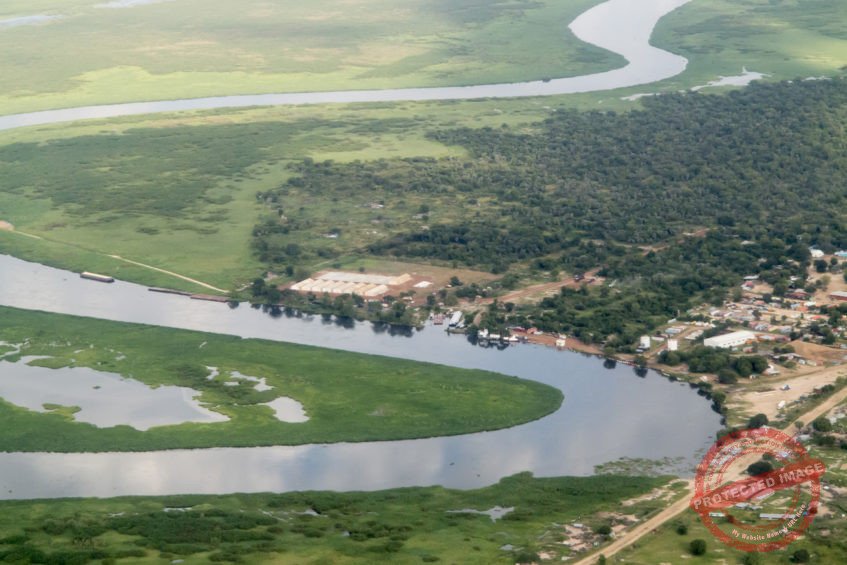
aerial view of nile river and town in south sudan
The government is calling on communities living along the banks of the River Nile and its tributaries to move to higher grounds as the river has reached what it terms as flood levels.
According to the Ministry of Water Resources, the flooding situation in the country is likely to worsen due to high water levels of the rivers and expected heavy rainfall between September and October.
The Ministry says it has recorded above-normal water increase levels in the country’s 13 major monitoring points on the Nile River as well as regional rainfall forecast.
Speaking during a media briefing in Juba this afternoon, the Undersecretary of the Ministry of Water Resources and Irrigation said the River Nile is at full capacity to its capacity.
“The river level has reached the maximum. In Mangalla, it has gone beyond the level that we expected.
“If rains are coming in, the river will not accept more water, and floods are expected to flash out the population at the banks of the river,
Peter Mahal adds that this will flash away those living near its sides.
Some of the areas set to experience flash floods according to the Ministry of Water Rerouces in Juba County include Lologo, Gondokoro and Mangalla.
A similar situation is anticipated in Terekeka, Awerial, Minkaman, Shambe, Duk, Bor, Leer, Panyijiar, Renk and other lowland areas in the country.
“It is important for the public to move from the lowland because when we are going to be cut off, it is going to be dangerous for everybody, ” said Health Minister Yolanda Awel.
Meanwhile, the Minister of Health Yolanda Awel, echoed a similar call on the population to move to higher grounds where they can access health services.
“The public health officers might not be able to reach you where you are. So, I am encouraging the public to move away from the flood-prone areas to high land.”
“Because I have got about four or five facilities that are already flooded as we speak. It is easier to move people before. That is why we are giving alarm that need us to pay attention to,” she added.

Currently on air
00:00:00 - 06:00:00
 1
1Published September 22, 2026
Published September 22, 2026
Published September 22, 2026
 4
4Published September 22, 2026
Published September 22, 2026
 6
6Published September 22, 2026
 7
7Published September 22, 2026
Published September 22, 2026
Published September 22, 2026
Published September 22, 2026
Published September 22, 2026
Published September 22, 2026
Published September 22, 2026
Support Eye Radio, the first independent radio broadcaster of news, information & entertainment in South Sudan.
Make a monthly or a one off contribution.
Copyright 2026. All rights reserved. Eye Radio is a product of Eye Media Limited.