
28th September 2026
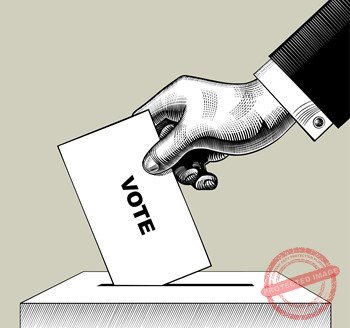
As the clock ticks down, the fate of South Sudan’s democracy is uncertain as the Presidency threw the ball into the court of electoral bodies to come up with a realistic timetable.
Although the majority of the citizens express readiness for elections, the anticipated polls are marred with politicking, casting a dark shadow on the democratic exercise likely to take place as scheduled.
Concerns mount over possible extension of the transitional period
This is as the key provisions of the 2018 peace accord remain unimplemented despite several extensions with parties blamed for lack of political will.
Yambio resident Dakpari Michael said “The signatories to the agreement should speed up the implementation of what was signed in the agreement” adding that this will “pave the way for a free and fair election in this country.”
Dakpari is among the young people who believe that the high cost of living and insecurity at the subnational level can only be addressed if “whatever is blocking the conduct of the election is resolved as soon as possible.”
South Sudan, a landlocked East African country of 12 million people, is currently experiencing economic hardship and delays in implementing key provisions of the 2018 peace accord, affecting the transition to democracy in the world’s youngest nation.
Despite the delay, Yambio resident Johnson Ueko is among those who are optimistic about voting in the anticipated general elections in December 2024 to elect their leaders.
Ueko believes “it is an election that will bring us the peace we are yearning for” adding that “we have lost many opportunities as a youth during this crisis and leaders are appointed but I believe our voice should be heard as the youth of this country by exercising our power to vote.”
“That is why I feel an election should take place,” Ueko told Eye Radio on Wednesday, August 14th in Yambio town.
There are only four months left for South Sudan to hold its first-ever democratic exercise in 13 years after gaining independence from Sudan.
However, the fate of the exercise remains unclear as parties to the 2018 revitalized peace agreement are yet to agree on the election timeline either to proceed with general elections in December or postpone.
Thot Hoth, a youth leader in Akobo County of Jonglei State, pointed out limited access to social services and a lack of development in the county, which he linked to the country’s inability to exercise its democratic rights.
“In 2010, every constituency was represented, but as we are speaking now, those representatives are not representing the community,” Thot said in an interview with Eye Radio.
According to him, “There has been a budget for development since 2010, but nothing has happened, so we need to change these people and maybe bring in new people who can work for the community.”
Election faces approval gridlock
The National Elections Commission, mandated by law to conduct the elections sixty days before the end of the transition period, has expressed concern after the parties failed to agree on the elections, calendar the body submitted for their approval.
Prof. Abednego Akok, head of the commission tasked with ensuring the outcome of the election broadly reflects the will of the electorate, said in June 2024, “We are waiting for approval from the political parties.”
“We have submitted the electoral calendar to them,” adding that “unfortunately, they have not yet compromised on it.”
The National Elections Commission was reconstituted by President Salva Kiir in November 2023 under the provisions of the constitution and the 2018 revitalized peace agreement as the legitimate body to conduct free, fair and credible elections in the country.
However, it is crippled by a lack of necessary resources to implement its activities, despite having reportedly received 22 Billion pounds in April this year.
On July 11th, 2024, Prof. Abednego directed the State High Committees, after their swearing-in, to commence civic education and voter registration to enable the country to hold elections as stipulated by the 2018 peace agreement.
So far, the National Elections Commission said it is waiting for a political decision on the fate of the election, while political leaders, on the other hand, have said they want to consult the electoral institutions for technical advice on the way forward.
“Our immediate concern now is to embark on voter registration and before we could embark on that there is a question mark somewhere which should be determined by the political parties, not me.” Prof. Abednego stated during a press conference in June 2024.
“For us, we want to run the general election, for them [peace parties] there is a suggestion on the road now that we may go in for partial election.” Which according to him will allow citizens to only elect the President, State governors and their County Commissioners.
Meanwhile, the High-level Standing Committee for the implementation of the R-ARCSS, in a meeting with the Presidency on Tuesday, 13th August 2024, agreed to task the electoral-related institutions to develop what they called “a realistic” timeline for the conduct of elections.
Cabinet Affairs Minister Dr Martin Elia Lomuro told the media after the meeting that all the parties have agreed on holding elections but differ on the timeframe.
The views presented to the President according to Lomuro include “two of which are in the extreme that of RTGoNU that election should be conducted that of the IO that election to be differed by 24 months.”
“For us to complete very important critical provisions that are still outstanding” adding that “somewhere in the middle, there is a view of SSOA which was talking about dialogue between the parties.”
According to Dr Lomuro, the Presidency directed the High-Level Standing Committee to charge electoral institutions to create a realistic timetable for the parties to agree on when elections should be conducted.
The election institutions put to task are the National Election Commission, the National Constitution Review Commission and the Political Parties Council “to challenge them with what they technically refer as challenges and provide a realistic timetable for us to now agree on when elections should be conducted.”
U.S. urges South Sudan to embrace Democracy
The U.S. Representative to the United Nations on Wednesday reiterated a call for South Sudanese leaders to open civic and political spaces as the elections draw closer.
In her address to the UN Security Council briefing on South Sudan in New York on August 14, 2024, Ambassador Linda Thomas-Greenfield emphasized the need for the parties to engage in dialogue to end the transitional period.
Ambassador Linda said, “South Sudan’s leaders and parties must engage in urgent dialogue, and bring this transitional period, started in 2011, finally to an end through peaceful and legitimate elections.”
“And of course, free and fair elections aren’t just about what happens on election day. They require open civic and political spaces, every single day – allowing all to meaningfully take part in democracy.” The diplomat added.
The US further commended the UN Mission in South Sudan, the African Union, and IGAD for their efforts in helping South Sudan realize transparency, fairness, and inclusivity in the electoral process.

Currently on air
00:00:00 - 06:00:00
 1
1Published September 22, 2026
Published September 22, 2026
Published September 22, 2026
 4
4Published September 22, 2026
Published September 22, 2026
 6
6Published September 22, 2026
 7
7Published September 22, 2026
Published September 22, 2026
Published September 22, 2026
Published September 22, 2026
Published September 22, 2026
Published September 22, 2026
Published September 22, 2026
Support Eye Radio, the first independent radio broadcaster of news, information & entertainment in South Sudan.
Make a monthly or a one off contribution.
Copyright 2026. All rights reserved. Eye Radio is a product of Eye Media Limited.