
28th September 2026
You are here: Home | Humanitarian | News | UNICEF: Violence in Jonglei State puts children’s lives at risk
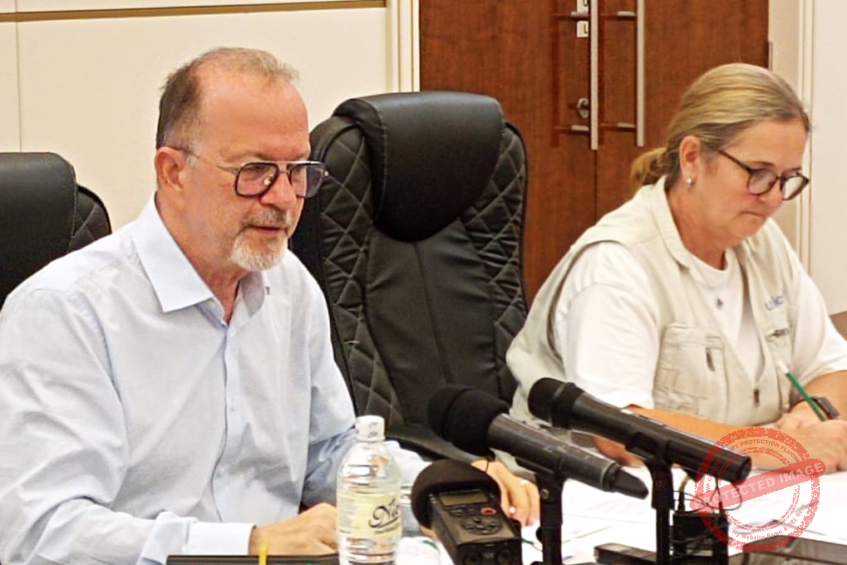
UNICEF Deputy Executive Director Ted Chaiban (left) and South Sudan Representative Noala Skinner (right) address the media in Juba on Thursday, April 2, 2026. The briefing followed a five-day mission to conflict-affected areas to assess the safety of women and children. 📸 Michael Atit/Eye Radio
UNICEF is warning that escalating conflict in Jonglei State is putting the lives of children in extreme danger and threatening their very survival.
Addressing the media following a field visit, UNICEF Deputy Executive Director Ted Chaiban described a humanitarian situation reaching a breaking point.
He revealed that the violence has forced dozens of families to flee their homes and led to the systematic destruction of vital infrastructure, including health centers in Uror County’s Yuai town.
During his visit to Yuai, Chaiban stated he was shocked by the level of devastation. Health workers and mothers on the ground reported they are living in a “critical situation,” lacking basic necessities including food, nutrition support for children, shelter, vaccines, and clean water.
The crisis hits a population already on the brink. Before this latest surge in violence, over two million children in South Sudan were at risk of acute malnutrition, while 2.8 million remained out of school.
“The reception and waiting rooms were destroyed and burned, the cold storage system for vaccines broken, and the water system vandalized,” Chaiban said.
“UNICEF has received reports of 28 health facilities damaged or destroyed across the state this year. Lives depend on this critical infrastructure, and it must be protected by all parties.”
The Deputy Executive Director highlighted the harrowing personal stories of the women he met. Many had lost children during treacherous journeys to find safety, with families being torn apart while fleeing in different directions.
Most distressing were reports of child abductions by armed youth. Chaiban described the mothers as “beside themselves with shock and fear.”
UNICEF and its partners are currently working to trace and reunite these children with their families, but Chaiban emphasized that more funding is needed for protection services and mental health support.
Despite the challenges, UNICEF reiterated its commitment to expanding support, providing health supplies, nutrition, and malaria bed nets as a first line of defense.
In his closing remarks, Chaiban called on all South Sudanese parties to end the violence and return to peaceful dialogue. He warned that the current crisis risks reversing the hard-won gains made in improving the lives of the country’s children.
“No progress can be made without lasting peace,” Chaiban concluded.

Currently on air
00:00:00 - 06:00:00
 1
1Published September 22, 2026
Published September 22, 2026
Published September 22, 2026
 4
4Published September 22, 2026
Published September 22, 2026
 6
6Published September 22, 2026
 7
7Published September 22, 2026
Published September 22, 2026
Published September 22, 2026
Published September 22, 2026
Published September 22, 2026
Published September 22, 2026
Published September 22, 2026
Support Eye Radio, the first independent radio broadcaster of news, information & entertainment in South Sudan.
Make a monthly or a one off contribution.
Copyright 2026. All rights reserved. Eye Radio is a product of Eye Media Limited.