27th September 2026

South Sudan’s civil society environment rated ‘weak’

An independent panel of experts has rated South Sudan’s environment for civil society as “Weak,” highlighting a gap between protections provided for in law and the realities faced by activists and civic groups.

The panel, convened by the South Sudan Human Rights Defenders Network (SSHRDN) last week, scored the country 2 out of 5 under the European Union’s Strengthening an Enabling Environment for Civil Society framework, known as EU SEE.

The assessment examined six areas, including fundamental rights, the legal and regulatory framework, access to funding, government openness, public attitudes towards civil society and digital security.

The panel found that although legal protections exist, their inconsistent application leaves human rights defenders, journalists and civil society organisations vulnerable to restrictions and intimidation.

James Bidal, head of the SSHRDN Secretariat, said the findings should prompt government action.

He described the score as “a call for urgent and concrete action,” arguing that civil society remains central to South Sudan’s peace process by documenting abuses and giving marginalised communities a voice in decision-making.

The assessment comes amid broader scrutiny of South Sudan’s human rights record.

A joint submission by SSHRDN and regional rights organisation defenders to the United Nations Universal Periodic Review has raised concerns over freedom of expression, opinion, assembly and association, as well as the protection of human rights defenders.

The network is now calling on the government to remove administrative and political barriers affecting civil society organisations and ensure that freedoms of expression, assembly and association are protected without interference.

It is also urging authorities to meaningfully involve civil society in policymaking and to address surveillance, censorship and online intimidation targeting civic actors.

SSHRDN says the 2 out of 5 score will serve as a baseline against which future assessments can measure whether conditions for civil society in South Sudan improve.

The assessment brought together experts from academia, government commissions, the legal sector, technology and intellectual property fields, as well as the United Nations Commission on Human Rights in South Sudan. Continue reading “South Sudan’s civil society environment rated ‘weak’”

‘All the crops are dead’: Aweil East appeals for urgent drought relief

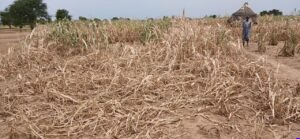
Authorities in Aweil East County of Northern Bahr el Ghazal State are appealing for urgent humanitarian assistance following a prolonged dry spell that has destroyed crops, dried up water sources and left thousands of people facing food insecurity.

The dry spell has affected all seven Payams of Aweil East County, according to the Relief and Rehabilitation Commission (RRC), with local officials warning that the situation could worsen if immediate assistance is not provided.

Simon Deng bak, Minister of Cooperative and Rural Development in Northern Bahr el Ghazal State, said the drought had severely affected communities across the state.

“It is actually a severe drought that has affected Northern Bahr el Ghazal generally,” Deng Baak said while speaking in Malwalbai Payam.

“All the crops are dead and all the water has dried up,” he added, saying even water points used by communities for safe drinking water had dried up, along with rivers.

Deng Baak said the prolonged dry spell had destroyed important food crops, including groundnuts and sorghum, while vegetable production had also been badly affected.

“The population in Northern Bahr el Ghazal used to cultivate vegetables more than any state in Northern Bahr el Ghazal,” he said, warning that the drought had now affected agricultural production across the region.

Photo Credit|Courtesy

The minister appealed to humanitarian and development partners, including the World Food Programme and agricultural organizations, to respond to the crisis.

“We need the World Food Programme and also agricultural organizations to come and see how the life is affected in all the areas of Northern Bahr el Ghazal,” Deng Baak said.

Aweil East County Commissioner Mawien Mawien Kuol described the situation as unprecedented. “What happened in Aweil East really, it is something very bad. It is shocking and saddening,” Kuol said.

“It is something new in the history of Aweil East, Northern Bahr el Ghazal and all. We did not expect such a dry spell like this since we were born.”

Kuol said the dry spell had created serious concerns over food, water, health and education. “My fear is that within this rain season, my people will not have food,” he said. “My people will not access clean drinking water.”

The commissioner also warned that the crisis could affect children’s access to education and healthcare as families struggle to meet their basic needs.

He said livestock were also at risk because rivers and ponds had dried up. “All rivers, ponds are empty. They are almost likely to die off because there is no rain,” Kuol said.

Kwal appealed to UN agencies, international organizations, national NGOs and other partners to intervene urgently.

“My appeal is to UN agencies, international organizations and national NGOs to quickly intervene in different aspects of human life as well as our animals,” he said.

Akot Mawic, Relief and Rehabilitation Commission coordinator for Aweil East County, said the dry spell began around the third week of June and continued through the end of August.

Mawich said 67 of the county’s 72 bomas were severely affected, while only about five were considered relatively better off.

He said the destruction of crops had left many households facing severe food shortages, with some people resorting to coping strategies to obtain food.

“Some even did not get even a one-day meal because of this hard crisis,” Mawich said. He explained that some residents were collecting water and firewood to sell in order to buy food.

The RRC coordinator said the crisis was also contributing to health problems, including childhood fever, diarrhea and acute malnutrition.

“There is a shortage of water. Food is also one of the challenges,” Mawich said. He added that returnee families were particularly vulnerable because they often depend on support from host communities, which are themselves struggling after their crops were destroyed.

“The crop that they cultivated are really damaged completely,” Mawich said. “There is no hope for the harvest for this year 2026.”

Mawich said an estimated 129,000 people had been affected by the dry spell in Aweil East County, while more than 87,000 people were reportedly facing food insecurity.

He called on the government and humanitarian partners to act urgently. “We also call on all the partners and the government to come together to see how we can support the people of Aweil East,” Mawich said.

The officials said the crisis was not limited to Malualbaai Payam , but extended across Aweil East County and other parts of Northern Bahr el Ghazal State.

Deng Baak said communities in lowland, midland and highland areas were all experiencing the effects of the prolonged lack of rainfall.

Kuol meanwhile suggested that climate change could be contributing to increasingly unpredictable weather patterns and called for longer-term measures to help communities cope with future dry spells.

“Climate change is real,” Kuol said. “In the absence of rain, we must have to develop some other mechanism to sustain our living and our livestock.”

Local authorities are now urging the government of South Sudan, UN agencies, humanitarian organizations and development partners to provide immediate assistance in food security, water and sanitation, health, education and livestock support before the situation deteriorates further. Continue reading “‘All the crops are dead’: Aweil East appeals for urgent drought relief”

Juba Commissioner rejects alleged plot allocation to comedians in Molobur

Juba County Commissioner Hon. Eng. Samuel Emiliano Wani Pitia has rejected the reported allocation of four plots of land in Molobur, Lado Payam, to a group of comedians .

The group allegedly led by Mr. Yai Thiik is yet to respond to the claims.

In a post dated September 6, the Commissioner strongly condemned the alleged allocation after a video circulating on social media appeared to show individuals claiming to be chiefs allocating the plots to the group.

“The Commissioner warns all individuals claiming to be chiefs or exercising customary authority against allocating, selling or transferring land without authorization from the competent land authorities,” the county statement said.

It described such actions as “unacceptable” and warned that they could “fuel land disputes, community tensions and insecurity.”

According to the county authorities, the reported allocation “is not recognized by the County Authorities” and must not be used as a basis for occupation, sale, development or further transactions.

The Commissioner has directed relevant departments to verify the matter and take appropriate action against anyone found engaging in unauthorised land dealings.

He also urged traditional and community leaders to respect the law and exercise their responsibilities within their lawful mandate.

“Juba County Authorities will not tolerate land grabbing or unauthorized land allocation,” the statement concluded. Continue reading “Juba Commissioner rejects alleged plot allocation to comedians in Molobur”

Egyptian TV presenter among 12 sentenced to death in drugs case

Egyptian television presenter Sarah Khalifa and 11 other defendants have been sentenced to death by hanging after being convicted in a major drug-trafficking case, according to Egyptian media reports.

The BBC reports that the defendants were accused of belonging to a criminal gang involved in importing ingredients used to manufacture drugs for distribution. Prosecutors said the group also possessed illegal firearms and ammunition.

Khalifa, 39, is known for presenting Mission Impossible, a television programme focused on crime and criminal investigations. She has denied the allegations against her. Her lawyer has said that she will appeal the death sentence.

Authorities reportedly seized more than 750kg (1,653lbs) of narcotics, along with raw materials allegedly intended for drug production. Prosecutors also presented statements from 20 witnesses, as well as electronic evidence including conversations and video footage.

The death sentences were initially announced last month but required confirmation after Egypt’s Grand Mufti provided the religious opinion required in capital punishment cases. The mufti’s opinion is advisory rather than binding on the court.

Nine other defendants were sentenced to life imprisonment, while seven were acquitted.

The case has also drawn attention because of Egypt’s continued use of the death penalty. According to Amnesty International, Egyptian courts issued 492 death sentences in 2025, with 23 executions carried out during the year.

The defendants’ convictions and sentences can be challenged through Egypt’s appeals process. Continue reading “Egyptian TV presenter among 12 sentenced to death in drugs case”

Govt urged to match 24-hour amendment speed with election funding

JUBA — South Sudan’s government should move as quickly to fund national election institutions as it did to amend and assent to the constitutional changes paving the way for the December 2026 general elections, youth activist Dr. Lukudu Philip Lasu has said.

The constitutional amendment was passed and assented to within 24 hours, a rapid move that cleared a major legal hurdle for the planned elections.

“It’s a very good move that you had really made, but perhaps as you were very fast into amending and signing the amendments, it is also my feeling that you will be faster in funding the national election institutions to see that the election becomes a reality,” Lasu said.

Lasu, Chairperson of the Specialised Committee on Foreign and Regional Integration of the South Sudan National Youth Council, welcomed the move but urged the government to match the speed of the constitutional process with action on election preparations.

He called for security guarantees for all voters and said the election must be “inclusive, credible and fair.”

“Not only an election, but an inclusive, credible and fair election,” Lasu said, stressing that young people, women and people with disabilities must be guaranteed security.

He also urged the government to swiftly implement the necessary electoral framework and fully fund the process using national resources.

Lasu called on the international community to provide guidance to ensure the accelerated election process does not threaten South Sudan’s national security. Continue reading “Govt urged to match 24-hour amendment speed with election funding”

Sudan army chief returns to Eritrea for second round of talks in two months

Sudanese Army Chief and Sovereign Council Chairman Abdel Fattah al-Burhan arrived in Asmara on Friday for talks with Eritrean President Isaias Afwerki, marking his second visit to Eritrea in less than two months.

Burhan previously visited Asmara on July 17 for discussions with Afwerki.

According to the Sudanese Sovereign Council, as cited by the Sudan Tribute, the latest trip is a “fraternal” visit focused on bilateral relations and ways to strengthen cooperation and coordination between Sudan and Eritrea in pursuit of their mutual interests.

Relations between Khartoum and Asmara have grown closer since the outbreak of Sudan’s war, with both countries increasing political and security coordination.

Eritrea remains an important player in the Sudanese crisis, sharing a more than 600-kilometre (370-mile) border with Sudan’s Kassala and Red Sea states.

26 killed in attack on SSPDF barracks in Warrap state

KUAJOK, South Sudan — September 4, 2026: At least 26 people were killed and eight others wounded when armed youth attacked a South Sudan People’s Defence Forces (SSPDF) military barracks in Acong-cong, Warrap State, the state government said.

The attack occurred at about 5 a.m. and targeted the military installation, which authorities said had been established to help maintain law and order between the Marial Wau and Apuk Gii communities.

According to a statement issued by the Warrap State Ministry of Information and Communication Services, those killed included 10 SSPDF personnel, six police officers and four civilians. The ministry said an 11-year-old boy was among the civilians killed at the barracks.

The statement also said six attackers were killed during the incident and that eight people were wounded, including a woman.

The government did not provide further details about what triggered the attack or whether arrests had been made.

“The motive of attacking a military installation remains unknown and shall be established through investigations,” the state government said.

Authorities said security agencies had been directed to identify and arrest those responsible for the attack and bring them to justice.

The Warrap State government, led by Governor Bol Wek Agoth, expressed condolences to the families and colleagues of those killed, saying the security personnel had died while protecting civilians.

“The government remains resolute in its commitment to maintain peace, enforcing the rule of law, and protecting civilian lives,” the statement said. Continue reading “26 killed in attack on SSPDF barracks in Warrap state”

President Kiir signs constitutional amendment, setting S. Sudan on path to December elections

President Salva Kiir Mayardit has assented to Constitutional Amendment No. 13, clearing a legal path for South Sudan’s planned December 2026 general elections.

The amendment was signed on Wednesday, September 2, following its passage by the Transitional National Legislative Assembly.

According to the Office of the President, the amendment separates the conduct of national elections from the completion of the permanent constitution-making process and the National Population and Housing Census.

The Office says this removes key legal obstacles and allows South Sudanese citizens to exercise their right to elect their leaders and government.

The assent follows a political process that began in December 2025, when the Expanded Presidency and political party leaders agreed on the need to proceed with elections and activate relevant provisions of the Revitalized Peace Agreement.

The amendment to the Revitalized Peace Agreement was assented to by President Kiir in July 2026, paving the way for further constitutional and electoral preparations.

The Office of the President says the constitutional amendment was subsequently developed, considered by the Cabinet, passed through the required legislative stages and approved by Parliament on September 1 before being submitted to the President for assent.

The development comes as South Sudan prepares for elections scheduled for December 22, 2026.

The government says the latest constitutional step will allow the country to move further into practical preparations for the elections. Continue reading “President Kiir signs constitutional amendment, setting S. Sudan on path to December elections”

South Sudan’s constitutional shortcut to elections: What could changing the peace deal mean for the country’s politics?

JUBA — South Sudan is once again changing the legal framework governing its political transition, with the National Legislature approving amendments that the government says are necessary to remove obstacles to the December 2026 elections.

The move follows amendments to the 2018 Revitalized Peace Agreement that separated the electoral timetable from two major transitional requirements—the completion of a permanent constitution and the conduct of a national census.

That raises a fundamental question about the direction of the country’s transition:

Why has it become easier for South Sudan’s political leadership to change the rules governing the transition than to implement the provisions designed to make that transition credible in the first place?

The question is not whether South Sudan should eventually hold elections. After years of transitional government and repeated delays, there is a legitimate argument that the country cannot remain indefinitely suspended between war and peace, or between transitional government and elected government.

The more difficult question is whether changing the legal requirements for elections is sufficient to create the political, institutional and security conditions in which an election can actually produce a credible and sustainable democratic transition.

Changing the Rules Is Easier Than Implementing the Peace

That distinction lies at the centre of South Sudan’s political dilemma.

Changing a rule is not the same as implementing the conditions behind it. A constitutional amendment can be negotiated, passed and enacted through a formal legislative process. Implementing a peace agreement, by contrast, requires resources, institutions, political compromise, security-sector reform, public participation and sustained cooperation among political actors who have spent years competing for power and, at different points, fighting one another.

The government’s argument is that the outstanding census and permanent constitution should no longer prevent elections from taking place.

On July 1, 2026, Oliver Mori Benjamin, caretaker chairperson of Parliament’s Information Committee, explained the amendment this way:

“The two main provisions amended concern the population census and the permanent constitution-making process. These have been deferred until after the elections and will be undertaken by the elected government.”

He added that the change would allow the National Elections Commission and political parties to accelerate preparations for the vote.

There is a logic to that position. South Sudan has already postponed elections repeatedly, and another delay could further weaken public confidence in the transition.

But it also creates a significant risk. If reforms originally intended to precede elections are moved to the period after elections, the government must convince the public and political opposition that this is genuinely a change in sequencing, rather than a decision to abandon or indefinitely postpone those reforms.

The Peace Agreement’s Unfinished Business

The Revitalised Agreement on the Resolution of the Conflict in South Sudan was not simply an agreement to hold elections.

It was designed to take the country from conflict and transitional government towards a more stable political order, with security arrangements, institutional reforms, constitution-making and electoral reforms intended to create the foundations for a peaceful political transition.

Yet many of those commitments remain incomplete. The concern is not new.

On February 27, 2026, the UN Commission on Human Rights in South Sudan said the country’s political and military leaders were “systematically dismantling” the 2018 peace agreement and undermining governance and security safeguards. UN Human Rights Commissioner Barney Afako was even more direct, warning:

“When leaders treat negotiated peace commitments as expendable, they create conditions in which violence flourishes.”

He said South Sudan was “at a dangerous crossroads.” The remarks were made as the Commission presented its findings to the UN Human Rights Council on February 27, 2026.

They are not being introduced in a political vacuum. They come after years of delayed implementation, repeated extensions and growing pressure to finally hold elections.

Security Reform Cannot Be Legislated Into Existence

The transitional security arrangements provide one of the clearest examples of the difference between legal reform and practical implementation.

The peace process was intended to bring forces previously aligned to opposing political camps into a more unified national security structure.

That requires training, funding, deployment, command arrangements and—above all—political confidence between former adversaries.

Parliament can amend a constitutional provision in a sitting. It cannot create a unified national security force in a sitting.

This is why the condition of the security sector may ultimately matter more than the wording of the constitutional amendments.

If security institutions remain divided, underfunded or perceived as politically aligned, an election can take place in a technically legal environment while citizens and political parties remain uncertain about whether they can participate safely and whether security forces will protect the electoral process impartially.

An Election Needs More Than a Date

South Sudan’s electoral institutions also require money, personnel, logistics and time. Setting December 22, 2026 as election day does not automatically mean the country is ready to conduct a credible election.

South Sudanese civil society groups and other stakeholders have repeatedly warned about this gap.

In a statement issued in Juba on July 7, 2026, stakeholders and adherents to the Revitalised Peace Agreement said: “A date, however welcome, does not in itself guarantee credible elections.”

They called for progress on security arrangements, the permanent constitution, the national census, civic and political space and the strengthening of electoral institutions.

Their strongest warning was even more pointed: Elections must be the outcome of a stable and enabling environment, not a substitute for one.” They also described the transition as “the defining test of political will.”  

That argument goes to the heart of the debate. A legal amendment may remove an obstacle, but it cannot finance voter registration, train election officials, provide polling materials or create public confidence in the institutions responsible for counting and announcing the results.

What Happens to the Permanent Constitution?

The decision to postpone the permanent constitution is perhaps the most consequential part of the new approach.

A permanent constitution is not simply another administrative requirement. It is supposed to establish the political and legal framework under which South Sudan will operate beyond the transitional period—including questions of governance, distribution of power, citizens’ rights and the relationship between national institutions.

The constitution-making process was therefore intended to provide an opportunity for a broader national conversation about the kind of state South Sudan wants to become after years of conflict.

The issue is not whether the permanent constitution can technically be completed after elections.

It can. The real question is whether there will be sufficient political pressure and institutional commitment to complete it once the urgency surrounding the elections has passed.

If the new government emerges from the December polls and inherits the same unresolved constitutional questions, unfinished security arrangements and political disagreements that have characterised the transition, South Sudan may discover that it has ended one transitional phase without resolving the problems that created the need for transition in the first place.

Who Has the Authority to Change the Peace Deal?

Another concern lies in the process through which the rules themselves are being changed. The 2018 peace agreement is not simply an ordinary statute passed by Parliament. It is a political settlement between parties that were once in conflict.

If some of those parties believe that the rules of that settlement can be changed without adequate consultation or consensus, the amendment process itself can deepen the mistrust that the peace agreement was intended to overcome.

This creates a larger constitutional question: Can the institutions created by the peace agreement redefine the conditions under which that same transition is supposed to end?

The answer will affect not only the December elections but also the credibility of the peace process itself.

The Government Has a Case

The government’s position should not be dismissed. Another extension could carry serious political costs. South Sudan has already spent years in transition, and indefinite postponement could weaken institutions, frustrate citizens and reinforce the perception that transitional government is becoming permanent.

The government therefore argues that outstanding reforms can continue after the elections and that the country needs to move towards an elected government rather than allowing the incomplete implementation of every transitional task to become an indefinite excuse for delaying the vote.

That argument would be considerably stronger if the government could demonstrate that the postponed reforms have firm timelines, guaranteed financing and broad political ownership.

The real issue is not whether every reform must be completed before election day. It is whether those reforms will remain politically binding after election day.

The Risk of an Election Without Trust

The greatest danger may not be the holding of elections itself, but the possibility that the election becomes contested because political actors do not trust the rules under which it was conducted.

In a country emerging from years of armed conflict, a disputed election can quickly become more than a constitutional or political disagreement.

If opposition parties believe that the legal framework was altered to favour the governing side, if citizens do not trust electoral institutions, if security forces are perceived as partisan, or if defeated candidates have no confidence in mechanisms for resolving disputes, the election could deepen political divisions instead of resolving them.

South Sudan therefore faces a particularly important test: Can its political system produce an electoral outcome that competing parties are prepared to accept even when they lose?

That requires more than legislation. It requires trust in institutions, confidence in the rules and credible guarantees that political competition will not return the country to confrontation.

Legally Ready, But Democratically Ready?

South Sudan can amend its Constitution and create a legal pathway to the December elections. But that does not automatically mean the country has created the institutional capacity, political freedoms, security guarantees and public confidence required for a credible democratic contest.

The law can authorise an election. It cannot by itself guarantee that citizens are free to participate, that political parties can compete on a level playing field, or that the eventual loser will accept the result. Those things require political compromise—the very work that has proved hardest during the transition.

The Paradox at the Heart of the Transition

The government wants to end the transitional period through elections, but some of the legal and institutional requirements attached to that transition are being changed or postponed precisely to make the elections possible.

The country may therefore become legally ready for elections faster than it becomes institutionally ready for democracy.

That does not mean the December elections should automatically be rejected or postponed. It means their credibility will depend on what happens around the election as much as what happens inside the polling station.

Political parties need meaningful space to organise and campaign. Citizens need to participate without intimidation. Electoral institutions need adequate resources. Security forces need to remain professional and politically neutral. And there must be credible mechanisms for resolving disputes.

At the same time, the government needs to provide a clear and publicly accountable roadmap for completing the permanent constitution, security reforms and other outstanding provisions of the peace agreement after the election.

What Must Happen Before December?

South Sudan needs credible answers on whether political parties will have meaningful space to organise and campaign, whether electoral institutions will receive the resources they need, and whether security forces will remain professional and politically neutral throughout the electoral process.

There must also be clear mechanisms for resolving electoral disputes and protecting journalists, candidates and voters from intimidation. At the same time, the government needs to provide a concrete and publicly accountable timetable for completing the permanent constitution and other outstanding provisions of the peace agreement.

These questions matter more than the election date alone.

If the government is confident that the postponed reforms will continue after the elections, it should have little difficulty putting those commitments into a clear, publicly accessible timetable that can be monitored by Parliament, political parties, civil society and international partners.

That would help demonstrate that the amendments are intended to change the sequence of the transition rather than weaken its substantive commitments.

The Question Beyond the Election

The deeper question is therefore not simply whether South Sudan will vote in December 2026. It is what political order that vote is intended to create.

If the election produces a government that still faces an unfinished peace agreement, unresolved security arrangements, constitutional uncertainty and deep political mistrust, South Sudan will have succeeded in changing its legal framework without necessarily changing its political reality.

The country cannot remain in perpetual transition. But ending the transition should not mean simply removing the conditions attached to it.

The real challenge is to ensure that the election becomes a bridge from the peace agreement to a functioning democratic system rather than another political milestone followed by another cycle of unfinished reforms.

The easiest part may be changing the rules. The difficult part is creating the political conditions that make those rules meaningful.

South Sudan now has to demonstrate that its constitutional shortcut is genuinely a route out of transition—not simply another way of postponing the difficult work of implementing the peace agreement.

And that is why the most important question surrounding the December elections is no longer simply:

“Will South Sudan vote?” It is: “Will the election finally move South Sudan from transitional politics to a legitimate and accountable political order?”

Disclaimer

This article brings together diverse views, official statements, analysis and commentary from South Sudanese authorities, civil society, international organisations, journalists and political analysts. The inclusion of a particular view or quotation does not imply endorsement by this page. Direct quotations are attributed to their original speakers or sources and are presented in their original context. The analysis and questions raised in this article are intended to encourage informed public discussion and debate. Continue reading “South Sudan’s constitutional shortcut to elections: What could changing the peace deal mean for the country’s politics?”

Former UK Prime Minister Keir Starmer to step down as MP

Former British Prime Minister Sir Keir Starmer has announced that he will step down as a Member of Parliament, ending his 11-year representation of the London constituency of Holborn and St Pancras.

The BBC reports that Starmer plans to focus on international affairs, including defence, security, trade and technology, as well as continuing his work to combat violence against women and girls.

His resignation will trigger a by-election in the constituency, which has traditionally been a stronghold for the Labour Party.

Starmer told the Camden New Journal that representing the constituency had been a “huge honour and privilege” and said it was the right time to leave Parliament.

He became prime minister after Labour secured a landslide victory in the 2024 general election, but resigned from Downing Street in July following pressure from within the party.

His successor, Andy Burnham, paid tribute to Starmer, highlighting his work on Ukraine and legislation aimed at strengthening the accountability of public officials.

The BBC says the decision comes after weeks of speculation over whether Starmer would remain in Parliament until the next general election, which is not expected until 2029.

The date for the by-election has not yet been set and will only be confirmed after Starmer formally vacates his Commons seat.

Labour is expected to select its candidate for the by-election by 9 September.

Support Eye Radio, the first independent radio broadcaster of news, information & entertainment in South Sudan.

Make a monthly or a one off contribution.